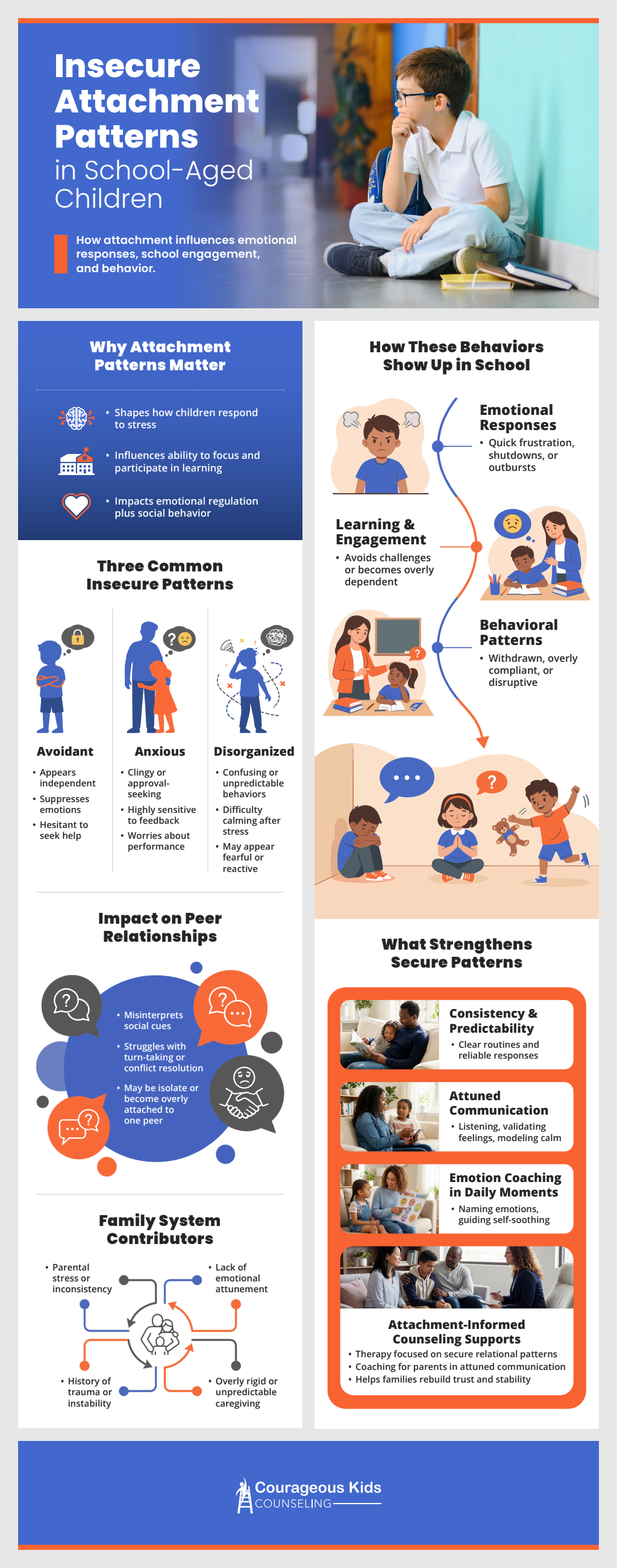

Children build emotional bonds early in life, and these connections shape how they relate to others as they grow. When a child does not feel consistently safe or supported, insecure attachment patterns can develop. These patterns often show up during school years, when social and academic demands increase. Recognizing these patterns early can help families respond with care and clarity.
Common Signs of Insecure Attachment
Insecure attachment can look different from one child to another. Some children may become very clingy and anxious when separated from a parent. Others may appear distant or avoid seeking comfort. These responses reflect how the child has learned to cope with stress.
School-aged children may also struggle with friendships or authority figures. They might have difficulty trusting others or managing frustration. Sudden emotional reactions or frequent worry can also be signs. These behaviors are often misunderstood as defiance or mood swings.
How Attachment Affects Daily Life
Attachment patterns influence how children handle challenges. A child with insecure attachment may have trouble focusing in school or completing tasks. They may seek constant reassurance or, in contrast, avoid asking for help altogether.
These patterns can affect peer relationships as well. Children may misread social cues or react strongly to small conflicts. Over time, this can impact confidence and self-esteem. Understanding the root of these behaviors can help parents respond in a more supportive way.
Supporting Stronger Emotional Bonds
Building a sense of safety is key. Children benefit from consistent routines and clear expectations. Predictable responses from caregivers help them feel secure. Small actions, such as listening closely, can have a lasting impact.
Open communication also helps. Encouraging children to share their thoughts and feelings creates trust. Even short daily check-ins can strengthen the connection. These moments show children that their emotions are seen and valued.
When Additional Support Is Needed
Some children may need extra support to work through attachment challenges. Professional guidance can help identify patterns and provide strategies for both children and parents. Options such as trauma therapy for children can offer structured support in a safe setting. Early support can make a meaningful difference. It helps children build healthier ways to connect and cope with stress.
Insecure attachment patterns can feel confusing at first, but they are not permanent. With consistent care and support, children can develop stronger emotional connections. Look over the infographic below to learn more.