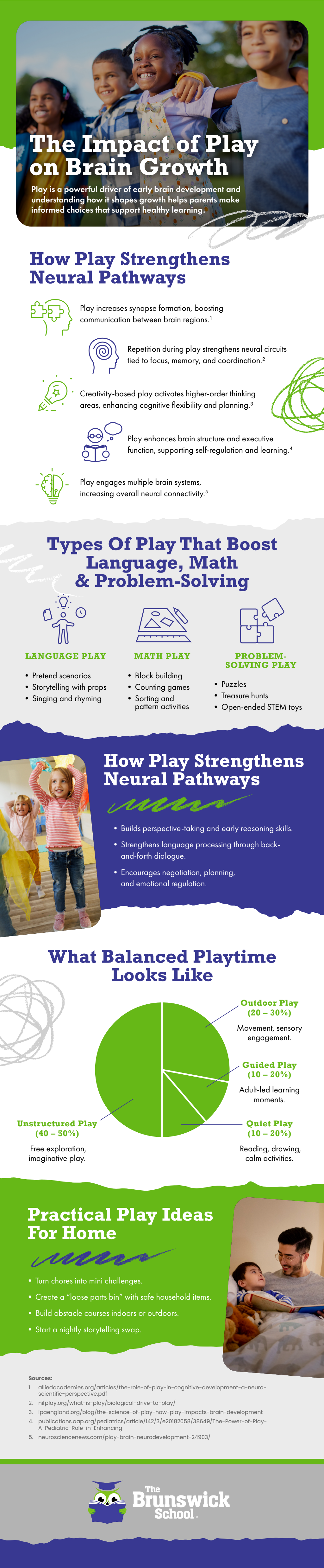

Play is often seen as a break from learning, but it plays a direct role in how a child’s brain develops. Through play, children explore, test ideas, and build new skills without pressure. These experiences help form connections in the brain. For parents, understanding the value of play can change how daily activities are approached.
Building Brain Connections Through Play
During play, the brain forms and strengthens connections between cells. These connections support learning, problem solving, and decision making. Activities such as building blocks, puzzles, and pretend play all help develop these pathways.
Repetition is important. When children repeat actions, their brains become more efficient at those tasks. This helps skills become more natural over time. Play also encourages curiosity, which drives children to explore and learn more about their environment.
Supporting Language and Communication
Play creates many chances for children to develop language skills. Talking during play, asking questions, and telling stories all help build vocabulary. Even simple games can support communication.
Pretend play is especially helpful. Children often act out roles and create conversations, which strengthens their ability to express thoughts and understand others. These skills are important for both school and social situations.
Strengthening Emotional Growth
Play also supports emotional development. Children learn to manage feelings such as frustration, excitement, and disappointment during games and activities. They begin to understand how their actions affect others.
Social play teaches cooperation and patience. Taking turns and sharing can be challenging at first, but these experiences help children build stronger relationships. Over time, they gain confidence in handling different social situations.
Creating Opportunities for Meaningful Play
Parents can support brain growth by creating space for different types of play. This does not require expensive toys or detailed plans. Simple activities, such as drawing, outdoor play, or building with everyday items, are effective.
Structured settings like Pre-K 4 programs also include play as part of learning. These environments combine guided activities with free play, helping children build a wide range of skills.
Play is a key part of how children learn and grow. It supports brain development, communication, emotional skills, and physical health. With time and encouragement, play can become one of the most valuable tools for supporting a child’s development. Look over the infographic below for more information.
Top Photo credit : Microsoft Stock Images