
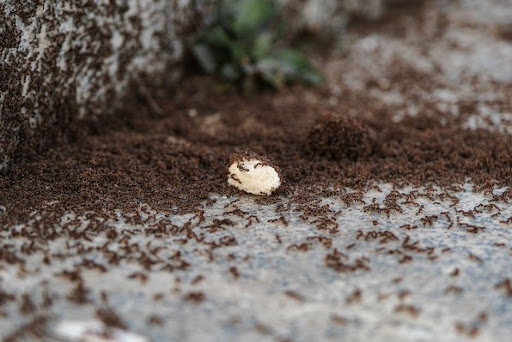
A heavy storm can change more than the appearance of a yard. Saturated soil, standing water, damaged vegetation, and increased moisture around foundations can disturb insects and other pests that normally remain hidden. Homeowners may suddenly notice ant mounds, mosquitoes, cockroaches, or other unwanted activity in places that seemed pest-free days earlier.
The useful response is not to spray everything immediately. Rain changes where pests shelter and how well some treatments work. Understanding those changes makes it easier to inspect the right places, protect children and pets, and decide whether a problem is temporary displacement or evidence of an established infestation.
Read New Fire Ant Mounds as Signs of Movement
One of the most noticeable post-storm changes can happen in the lawn. Understanding why fire ant mounds appear after heavy rain starts below the surface: saturated soil can disrupt underground tunnels and force colonies toward higher, drier areas.
The mound that seems to have appeared overnight may therefore represent an existing colony responding to changed soil conditions rather than a completely new infestation. Colonies may shift toward elevated sections of the lawn or areas around curbs, sidewalks, driveways, foundations, slabs, and utility equipment.
That distinction matters because destroying the visible mound does not necessarily address the entire colony. Treat the mound as evidence of a larger underground system rather than assuming all the ants occupy the loose soil visible above ground.
Inspect the Yard Before Mowing It
After several days indoors because of bad weather, mowing the lawn may be high on the weekend list. Inspect first.
Walk through the yard once conditions are dry enough to do so safely. Look for fresh mounds along lawn edges, around trees, beside paved surfaces, near utility areas, and close to places where children or pets normally spend time.
This simple inspection can prevent accidental encounters. Fire ants aggressively defend disturbed colonies, and a mower, rake, shovel, or trimmer can disturb a mound before the person using the equipment realizes it is there.
Mark suspicious areas temporarily so other household members know to avoid them. If you are uncertain what kind of ant created a mound, identification should come before treatment. Different ant species can require different management strategies.
Watch Where Excess Water Pushes Other Pests
Fire ants are not the only household pests affected by a storm. Water can make existing hiding places unsuitable for many creatures, increasing activity around structures.
Inspect the transition between yard and house. Look around door thresholds, garage edges, patios, utility penetrations, foundation gaps, and other sheltered entry points. Damp mulch piled against the building and vegetation touching exterior walls can provide convenient cover.
Inside, pay particular attention to garages, laundry rooms, kitchens, bathrooms, and other areas offering moisture or food. A single insect after a storm does not automatically mean there is a major infestation, but repeated sightings deserve investigation.
Rather than reacting only to the pest you can see, ask what environmental change may have brought it there. Moisture management and exclusion can sometimes address the underlying attraction.
Remove Standing Water Before Mosquitoes Benefit
Storm cleanup should include a search for small containers holding water. The obvious puddle in the yard may not be the only concern.
Flowerpot saucers, children’s toys, buckets, tarps, clogged gutters, wheelbarrows, outdoor furniture, and discarded containers can all collect rain. Even objects that appear too small to matter can provide mosquito breeding habitat.
Empty water where practical and correct whatever allows it to collect repeatedly. Gutters should drain properly, containers can be stored upside down, and outdoor items should be arranged so rain runs off rather than pooling.
This is a useful example of prevention being more efficient than reaction. Reducing breeding opportunities around the property can limit future mosquito pressure without relying exclusively on treatments after adult mosquitoes become noticeable.
Be Careful About Treating Wet Ground Immediately
Discovering a fresh mound can create an understandable urge to treat it immediately. Right after a downpour, however, may not be the most effective time.
Wet conditions can interfere with some pest-control products by diluting them, carrying them away through runoff, or preventing them from working as intended. Another storm shortly after application can create the same problem.
Always follow the product label, including directions related to weather, application, protective equipment, and areas where the product should not be used. Avoid improvising mixtures or assuming that applying more will produce better results.
For fire ants specifically, treatment strategies can include individual mound treatments and broader bait approaches. Because colonies extend underground, successful management requires thinking beyond the soil visible at the surface.
Make the Home Less Attractive After the Storm
Heavy weather can expose small maintenance problems that pests are happy to exploit.
Check weatherstripping around exterior doors and the garage. Examine screens for damage and look for obvious openings around pipes, cables, vents, and other penetrations. Keep food sealed, clean crumbs and spills, and avoid leaving pet food accessible overnight.
Moisture deserves equal attention. Repair leaks, investigate persistent dampness, and improve ventilation where necessary. Outside, keep gutters functioning and avoid allowing debris or dense vegetation to create consistently damp shelter against the house.
These measures will not make a property completely pest-proof. They do, however, remove some of the food, water, shelter, and entry opportunities that allow an outdoor pest problem to become an indoor one.
Protect Children and Pets From Fresh Activity
Post-rain pest management is also a household safety issue.
Children and pets may investigate loose soil without recognizing a fire ant mound. Newly visible mounds near play equipment, walkways, patios, or pet areas deserve particular attention. Until the situation has been assessed, create enough distance to prevent accidental disturbance.
Fire ants can sting repeatedly. Most encounters are painful and localized, but some people can experience serious allergic reactions. Anyone showing signs of a severe reaction after insect stings requires prompt medical attention.
Pets can also encounter ants while sniffing or digging. Checking the yard before letting animals roam freely after significant rain is a simple precaution, especially when mounds have appeared previously on the property.
Know When Repeated Mounds Signal a Bigger Problem
One mound after unusual weather is different from persistent activity throughout the property.
Pay attention to patterns. Are mounds returning after previous treatment? Are they appearing near walkways, patios, electrical equipment, or the foundation? Do you repeatedly see ants indoors as well? Has the problem spread despite reasonable prevention efforts?
Those patterns may justify professional identification and a broader management strategy. Effective pest management often considers the species, colony behavior, environmental conditions, and entire property rather than treating each visible mound as an unrelated event.
Keep simple notes or photographs if the problem recurs. Knowing where and when activity appeared can make patterns easier to recognize.
Turn the Post-Rain Walkaround Into a Routine
The best time to discover a pest problem is before somebody steps on it or it moves indoors. Make a short property inspection part of the routine after periods of heavy rain.
Once conditions are safe, check the lawn for new mounds, empty standing water, inspect drainage, and look around the foundation and garage. Notice damaged screens, clogged gutters, damp areas, and new pest activity.
The purpose is not to become alarmed every time an insect appears. Outdoor ecosystems naturally contain ants and countless other organisms. Instead, focus on changes that increase contact with people, pets, or the house.
Heavy rain can make hidden pest activity suddenly visible, but that visibility is useful information. A careful inspection, sensible moisture control, properly timed treatment, and attention to recurring patterns can turn the days after a storm into an opportunity to prevent a much more inconvenient household pest problem later.
Top Image Source: Pexels
Leave a Reply