
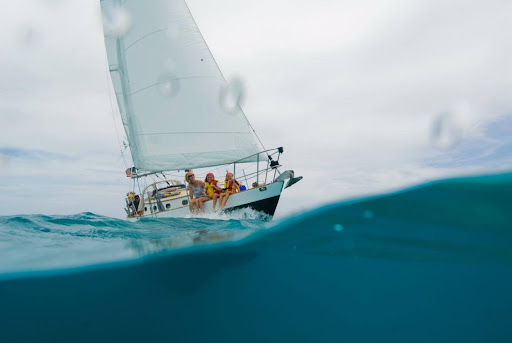
Clear communication matters on the water, especially when boating with children. Engine noise, wind, distance, and changing conditions can make ordinary conversation difficult. Families should know several basic sound, radio, and visual signals before leaving the dock so they can communicate with other boaters and respond appropriately during an emergency.
Learn the Basic Sound Signals
Boat horns and whistles are more than ways to attract attention. They can communicate a vessel’s intentions to nearby boaters.
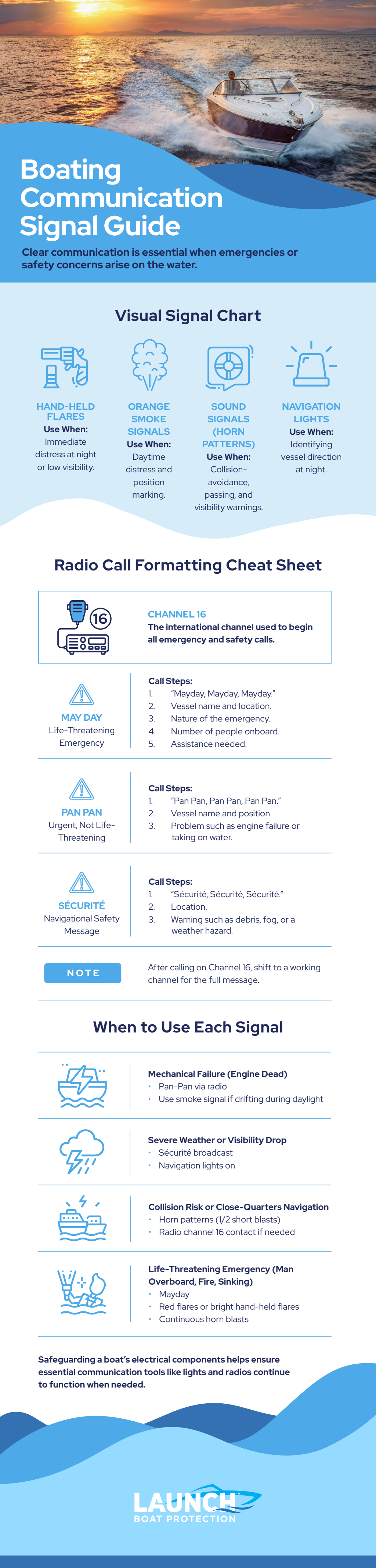
For power-driven vessels in sight of one another, one short blast generally signals an intention to alter course to starboard, while two short blasts indicate an intention to alter course to port. Three short blasts communicate that a vessel is operating astern propulsion.
Five or more short, rapid blasts indicate danger or doubt. Parents should teach children that repeated horn blasts may carry an important message and should never be treated as a game.
Know How to Call for Help
A VHF marine radio can be especially valuable because it allows boaters to communicate with other vessels and emergency services.
Channel 16 is the primary calling and distress channel. “Mayday” is reserved for situations involving grave and imminent danger that require immediate assistance. A distress call should include the vessel’s name, location, nature of the emergency, number of people aboard, and other information that could help rescuers.
Recognize Visual Distress Signals
Communication becomes more difficult if radio equipment fails or another vessel is too far away to hear a horn. Approved visual distress signals can help attract attention.
Depending on the vessel and operating conditions, equipment may include red flares, orange distress flags, or electric distress lights. Boaters should check federal and state requirements for the waters where they plan to operate.
Make Communication Part of Boat Preparation
Before departure, test communication equipment and make sure required safety gear is accessible. Safety equipment should receive the same attention as mechanical maintenance, registration documents, and boat warranty information.
Children should also know who is responsible for giving instructions during an emergency. Clear roles reduce confusion when quick action matters.
Good boating communication begins before anyone leaves shore. Knowing common sound signals, proper radio procedures, and visual distress methods gives families several ways to communicate when conditions make ordinary conversation impossible. Check out the infographic below to learn more.
Top photo image credit: Microsoft Stock Images
Leave a Reply