


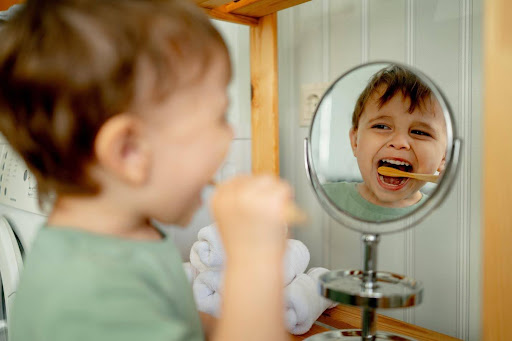
Healthy teeth are crucial for children’s overall wellbeing. Early habits shape oral hygiene routines, and consistent care prevents cavities, gum issues, and long-term dental problems. Parents play a central role in guiding children through daily care and professional checkups.
Daily Brushing and Flossing
Brushing twice a day is essential, using a soft-bristled toothbrush and age-appropriate fluoride toothpaste. For children under three, a rice-sized amount of toothpaste is enough. Older children should use a pea-sized amount and focus on all tooth surfaces. Flossing should begin once two teeth touch. It removes plaque and debris that toothbrushes cannot reach, helping prevent cavities between teeth.
Healthy Eating Habits
Diet impacts oral health more than many parents realize. Limit sugary snacks and drinks, which feed cavity-causing bacteria. Encourage water between meals and offer fruits, vegetables, and dairy products to strengthen teeth. Sticky or starchy foods require extra brushing afterward, as they tend to linger on enamel longer than other foods.
Regular Dental Visits
Routine dental visits help detect problems early. Children should see a dentist by their first birthday and maintain checkups every six months. Professional cleanings remove plaque buildup that home care cannot eliminate. Dentists can also provide sealants or fluoride treatments for additional protection. Establishing a positive relationship with dental professionals reduces fear and promotes lifelong dental care habits.
Emergency Preparedness
Accidents happen, from a fall during play to a sudden toothache. Knowing what to do in urgent situations can prevent further damage. Keep contact information for an emergency dentist handy and understand basic first-aid steps for dental injuries, such as rinsing a knocked-out tooth and storing it in milk until treatment. Quick action can make a significant difference in outcomes.
Habits for a Lifetime
Encourage children to avoid chewing on hard objects like ice or pens, which can damage teeth. Monitor thumb sucking or pacifier use beyond toddler years, as these habits may affect bite alignment. Lead by example. Parents who demonstrate proper brushing and flossing routines reinforce the importance of consistent care.
A simple checklist combining daily hygiene, healthy eating, regular dental visits, and emergency preparedness ensures children develop strong oral health habits. Proactive care today reduces risks tomorrow and gives children the confidence of a healthy smile that lasts. Look over the accompanying infographic to learn more.
Top Photo Image Credit: Microsoft Stock Images


Leave a ReplyCancel reply