
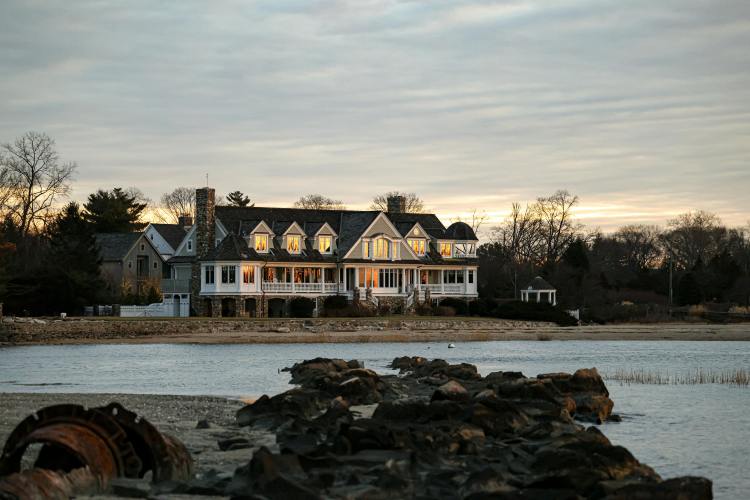
There’s something about coastal living that changes how people think about home design. The palette shifts, brighter, lighter, more connected to the outdoors. The materials change, more natural, more durable, more honest in their relationship with the environment. The relationship between inside and outside becomes more intentional, with the view, the light, and the proximity to water becoming as much a part of the home as any interior feature.
Designing a home that genuinely reflects coastal living isn’t about adding nautical motifs or painting everything white. It’s about creating spaces that feel as connected to their setting as the landscape they sit within.
Here’s what that looks like when it’s done well.
1. The Site Relationship Is Everything
A coastal home that turns its back on the water, blocks its own views, or sits in awkward relationship to the prevailing wind and light has failed at the most fundamental design level, before a single interior decision is made.
The best coastal homes are positioned and oriented to maximise what the site offers: prevailing breezes that enable natural ventilation, orientation that captures morning or afternoon light based on how the home will be used, and views that are framed deliberately rather than left to chance.
This means site analysis before design begins is non-negotiable. Understanding the landscape, the light, the wind, the vegetation, and the visual relationship to the water allows every subsequent design decision to build on that foundation rather than work against it.
2. Materials Should Belong to Their Environment
Coastal environments are tough. Salt air, humidity, strong sun, and storms can quickly damage materials that are not suited to the setting.
The right materials should be both durable and natural to the space, such as:
- Weathered timber that ages beautifully
- Natural stone that reflects the coastline
- Concrete that wears gracefully over time
- Quality glass that keeps views open and bright
A coastal home should feel like it belongs to its surroundings, not like it was placed there without thought. Studies from the American Institute of Architects also highlight that climate-appropriate materials, better insulation, and durable design choices help create homes that are more comfortable, resilient, and cost-effective over time.
3. Luxury and Restraint Coexist in the Best Coastal Homes
The best coastal homes feel both luxurious and simple at the same time. Their beauty comes from quality materials, thoughtful details, and a strong connection to the surrounding landscape.
Luxury is found in precision, not excess. Clean lines, natural textures, and well-planned spaces create elegance without unnecessary complexity. Instead of competing with the view, the architecture allows the setting to remain the focus.
For darien luxury homes, Hobbs, Inc. follows this approach by creating spaces where quality, comfort, and the natural surroundings work together seamlessly. A truly well-designed coastal home feels calm, refined, and naturally connected to its environment.
4. Indoor-Outdoor Connection Is the Defining Feature
In coastal living, the distinction between inside and outside is meant to be permeable. Wide openings that create full connection to outdoor terraces when open. Covered outdoor spaces that extend the living area into the landscape. Transition spaces like verandas, loggias, deck areas that are neither fully inside nor outside. Flooring that flows from interior to exterior without interruption.
The homes that most successfully capture the essence of coastal living are those where the boundary between inside and outside is a design feature rather than a fixed line. Spending time in these homes, the sense of connection to the landscape is constant, whether or not a door or window is actually open.
5. Light Is the Most Important Material in Coastal Design
The quality of light near water is distinctive, brighter, more reflective, with a clarity that changes throughout the day in ways that don’t occur in inland settings. Coastal home design at its best treats this light as a primary material, designing spaces that capture it, play with it, and change character throughout the day as it moves and shifts.
High windows that introduce light into spaces from unexpected angles. Reflective surfaces, pale stone, polished concrete, white-washed timber, that amplify and distribute light throughout the interior. Careful shading that controls glare without blocking the brightness that coastal light provides. The relationship between the building and the light it receives is one of the most expressive tools available to a coastal home designer.
6. Durability and Beauty Are Not in Conflict
A common misconception in coastal home design is that durability requires compromising on beauty, that the materials and systems robust enough to handle the coastal environment are necessarily less refined than those used in more sheltered settings. The best coastal architecture disproves this consistently. The materials that belong in a coastal environment, natural stone, hardwood, marine-grade metals, quality glass, are inherently beautiful. Their durability is a product of their character, not despite it.
Choosing materials for their inherent qualities, aesthetic, tactile, and physical, rather than selecting beautiful materials and then trying to protect them from the environment produces homes that age gracefully.
The coastal home that looks better at twenty years than it did at two is the one designed with this principle from the beginning.
7. The Interior Should Continue the Conversation With the Landscape
A coastal home whose interior design disconnects from its setting, heavy, dark, inward-looking rooms that could belong anywhere, wastes the most significant asset the site provides. Interior design in a coastal home should continue the conversation that the architecture begins. Colours drawn from the landscape. Textures that echo natural materials. Furniture that doesn’t compete with the view. Spaces that feel calm, open, and connected to the light and air outside.
This doesn’t mean minimalism for its own sake or the elimination of comfort and warmth. It means making design choices that support the experience of coastal living rather than working against it. Creating interiors that feel as naturally connected to their setting as the best of the architecture that surrounds them.
Final Thoughts
Designing a home that truly reflects coastal living requires more than proximity to water and a coastal aesthetic. It requires a genuine response to the site, the light, the materials of the environment, and the way people live when they’re close to the coast.
The homes that capture this most completely are the ones where every decision, from orientation to material to interior palette, has been made in service of the relationship between the building and its setting. When that relationship is right, the home doesn’t just sit near the coast. It belongs there.
Top Photo: Image Credit
Leave a Reply