

Trying local food is one of the best parts of family travel. New meals, snacks, and cooking styles give children a chance to experience different cultures while creating memorable family moments. At the same time, eating in unfamiliar places may create concerns about picky eaters, allergies, or food safety.
Research Family Friendly Foods Ahead of Time
Parents often benefit from reviewing common dishes before arriving at a destination. Looking at restaurant menus online may help families identify meals children are more likely to try. Foods made with familiar ingredients such as rice, chicken, pasta, or bread often make good starting points for younger travelers. Translation apps can also help parents identify allergy information or important food terms when traveling internationally.
Start Small With New Foods
Children usually respond better when trying small portions of unfamiliar foods instead of large meals filled with new ingredients. Sharing plates allows family members to sample local dishes without wasting food if children dislike certain flavors. Street markets and food halls may also work well for families because they offer smaller servings and multiple choices in one location. Parents who stay relaxed during meals often help children feel more open to trying new foods gradually.
Keep Food Safety in Mind
Busy restaurants with steady customer traffic are often safer choices because food turnover happens more frequently. Freshly cooked meals generally carry a lower risk than foods sitting at room temperature for long periods. Families should also review local guidance about tap water, ice, and raw foods before traveling.
Some parents purchase travel insurance in case of cancellation before larger trips, in case of illness, or unexpected travel problems affecting vacation plans. Simple precautions may help families avoid food-related health issues during travel.
Respect Local Dining Customs
Learning basic dining etiquette can improve family travel experiences significantly. Meal times, tipping practices, and restaurant customs vary between countries and regions. Teaching children simple phrases and polite dining behavior may also help them feel more involved during meals. Food experiences often become more meaningful when families approach local customs with curiosity and patience.
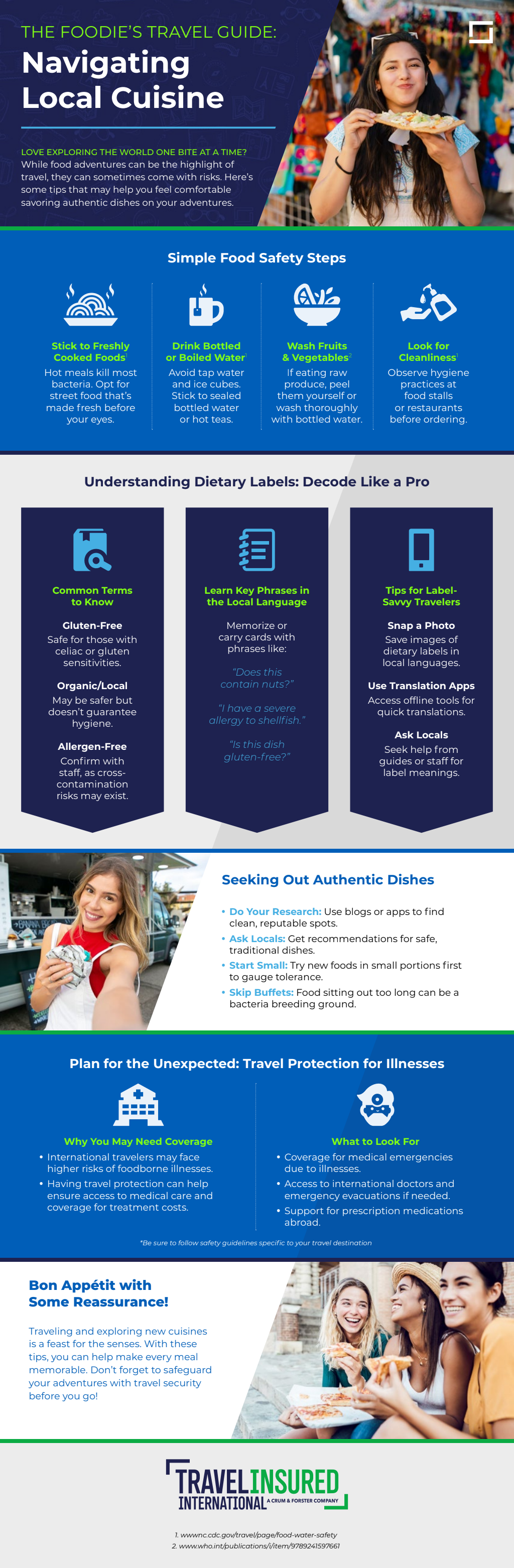
Local cuisine allows families to experience culture through shared meals and new flavors. Preparation, flexible meal planning, and practical food safety habits may help moms create smoother dining experiences while traveling with children. Check out the infographic below for more information.
(top photo credit: Microsoft Stock Images)
Leave a Reply