
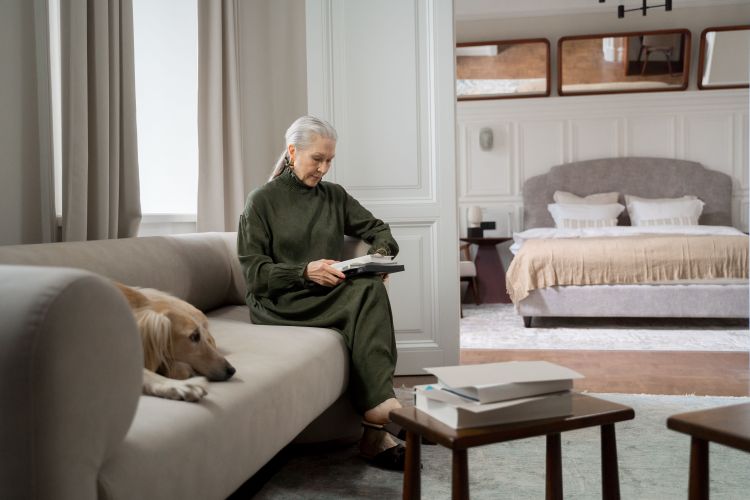
Most homes are built for the people who move through them easily, being able to step over a raised threshold, reach a high cabinet, or navigate a dim hallway without a second thought. As mobility, balance, and vision change with age, those same features quietly become hazards. The good news is that most of these hazards can be addressed proactively, well before an injury forces the issue.
The scale of the risk is well documented by public health data. According to the Centers for Disease Control and Prevention (CDC), more than 25% of older adults fall each year, and falls remain the leading cause of injury among adults aged 65 and older. In Middletown, CT, where many longtime homeowners are hoping to stay in the homes they’ve lived in for decades, that trend has made thoughtful, proactive home modification a genuinely urgent priority rather than a someday project.
Independence Erodes Gradually Over Time
It’s rarely one dramatic fall that ends someone’s ability to stay in their own home. More often, independence erodes in small increments: skipping a shower because getting in and out feels risky, avoiding the basement stairs, and quietly asking someone else to twist a doorknob that used to be effortless. These avoidances rarely get reported, because they don’t look like emergencies. They look like just part of getting older.
But each one is a small transfer of independence away from the person and toward whoever ends up compensating for it. Recognizing this pattern early, before it becomes a genuine safety crisis, is what separates proactive home modification from reactive crisis management after a fall has already happened.
Fall Prevention Depends on More Than Balance Alone
Balance is often treated as the whole story behind fall risk, but staying upright in a home actually depends on several factors working together.
- Stable footing: non-slip or low-pile flooring in place of loose rugs or slick tile
- Adequate lighting: brighter, well-placed lighting in hallways and stairwells to see what’s underfoot
- Something to hold onto at key moments: grab bars near toilets and inside showers, positioned exactly where balance is tested most, standing from a seated position, stepping into a shower, navigating a hallway at night
Treating these as a connected system, rather than a checklist of separate purchases, tends to produce a home that actually feels safer to move through, not just one that technically meets a list of recommended features. This matters because balance issues often develop gradually. Meaning a home that felt perfectly safe five years ago may have quietly become a genuine hazard without any single dramatic change signaling the shift.
Accessible Entryways Make Daily Life Easier
For someone using a cane, walker, or wheelchair, a single step or narrow doorway isn’t a minor inconvenience; it’s a real barrier, and over time that friction leads people to simply go out less. This kind of modification often gets overlooked because a step doesn’t look dangerous the way a staircase does, but the daily hesitation it creates is itself an erosion of independence, even before any fall occurs.
This is exactly the kind of gap aging in place home modifications are designed to close, removing the hesitation that builds up around thresholds, steps, and tight passageways before it turns into full avoidance. Change Inc works with homeowners in Middletown, CT, to identify exactly where these threshold barriers exist and address them with ramps, widened doorways, and leveled entry points that restore an entryway to something that requires no decision at all, just an easy, confident step through.
Hand Dexterity Shapes Everyday Independence
Round doorknobs, small faucet handles, and narrow drawer pulls all require a level of grip strength and fine motor control that many people simply lose some of as they age, particularly those managing arthritis or reduced hand strength. Unlike a fall, this kind of limitation doesn’t announce itself dramatically; it shows up as a slowly growing list of small tasks someone starts asking for help with.
- Lever-style door handles: replacing round knobs that require twisting with a simple push or pull motion
- Larger D-shaped drawer pulls: easier to grip than small, narrow handles that demand precise fingertip control
- Single-lever faucet controls: reducing the twisting and fine grip required by traditional knob-style faucets
This category of modification tends to be the most overlooked precisely because it feels minor, like a doorknob or a faucet, but the cumulative effect of dozens of small daily frustrations adds up to a genuine, if invisible, form of dependency on others for tasks that were once entirely routine.
Getting Help Quickly Improves Home Safety
For seniors living alone, or spending significant stretches of the day without anyone else present, the real question isn’t just whether a fall or medical event might happen; it’s how quickly help would actually arrive if it did. A home that’s physically safe but has no way to summon help quickly still leaves a critical gap in genuine safety. Medical alert systems, motion sensors that detect unusual inactivity, and simple check-in technology all address this gap directly.
This matters most during the hours when no one else is around to notice if something has gone wrong. Families often focus heavily on preventing falls while giving far less thought to what happens after one occurs, despite response time being one of the biggest factors in how serious the injury ultimately becomes.
Small Changes That Often Signal It’s Time for Home Modifications
A few behavioral patterns, rather than a single dramatic incident, tend to signal that home modifications are overdue.
- Consistently avoiding showers, baths, or specific rooms: without a clear explanation, often because getting in or out feels risky
- Turning down invitations or outings: involve stairs, uneven ground, or walking longer distances
- Quietly asking for help with small tasks: opening jars, turning doorknobs that used to be effortless
None of these signs alone is necessarily alarming, but together, they often indicate that a home’s current layout has become genuinely limiting, rather than simply familiar.
Conclusion
Home modifications for aging in place aren’t really about installing a list of safety features; they’re about protecting the daily freedoms that make a life feel like one’s own, the ability to shower without help, step outside without hesitation, and manage everyday tasks without quietly depending on someone else. When a home genuinely supports independence rather than working against it, aging in place stops being a risk to manage and becomes simply what a good, well-adapted life continues to look like.
Top Photo: Image Credit
Leave a Reply