
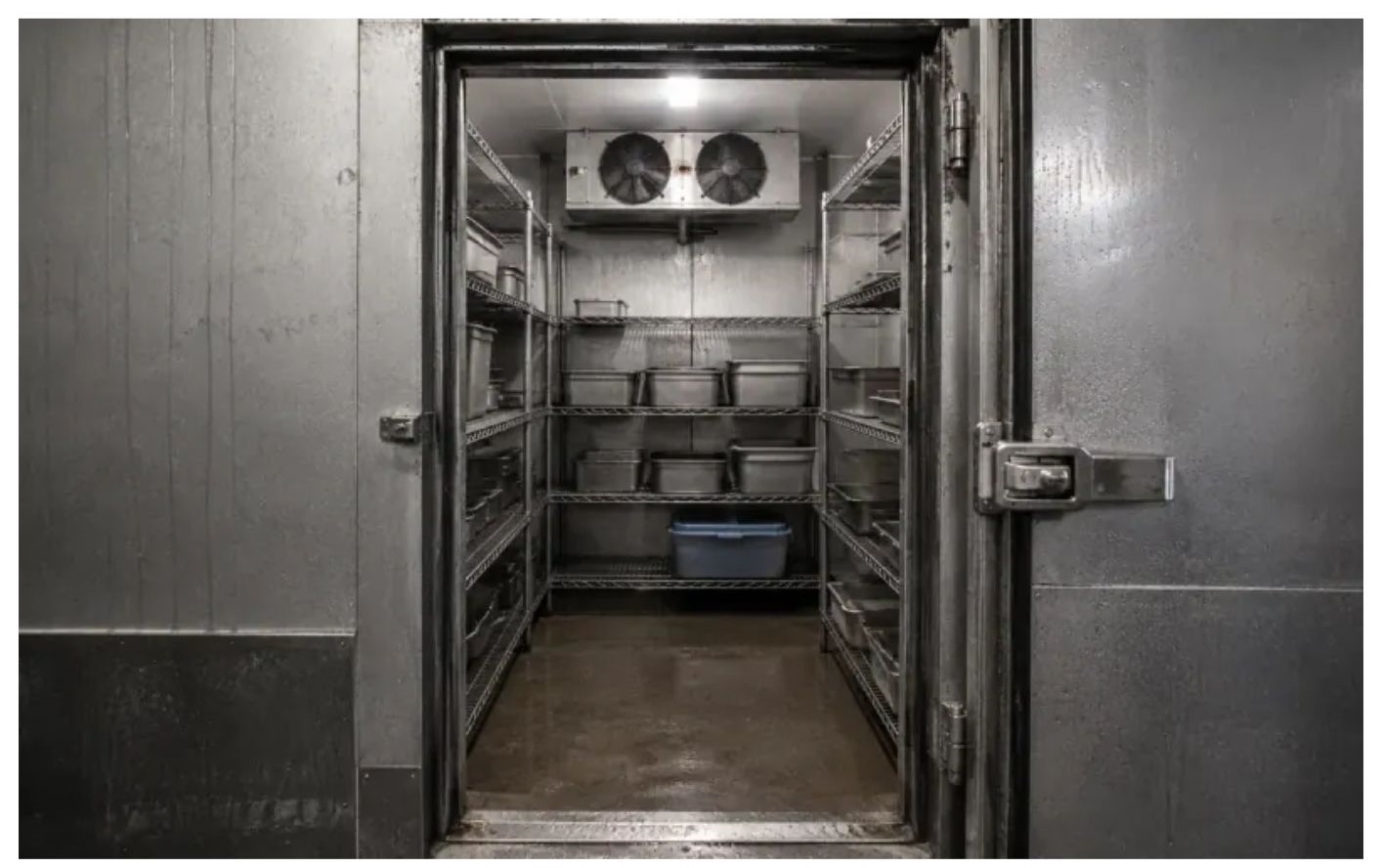
When we take the kids out for pizza, ice cream or a Friday-night burger, most of us think about the menu and the bill. Very few of us think about the machines humming in the back of the kitchen. Yet those machines — walk-in coolers, reach-in refrigerators, freezers and ice makers — decide whether the food on our children’s plates is fresh and safe. Here is a family-friendly look at what goes on behind the counter, and a few things parents can notice the next time they eat out.
The cold chain, explained for kids (and grown-ups)
Food that needs to stay cold — milk, cheese, meat, fish, cut fruit, salads — travels through a “cold chain.” It leaves the farm or factory in a refrigerated truck, arrives at the restaurant’s back door, goes straight into a walk-in cooler and then into smaller refrigerators on the line where cooks can reach it. Every link in that chain has to stay at about 41°F or colder. If one link breaks, bacteria start multiplying, and the food can make people sick even if it looks and smells fine.
It is a nice thing to explain to older kids: the reason a restaurant can serve you a cold, crisp salad in July is that a whole series of machines worked all day long to keep it that way.
The walk-in cooler: the restaurant’s giant refrigerator
A walk-in cooler is exactly what it sounds like — a refrigerated room big enough to walk into. Restaurants store most of their perishable food there. It has an insulated box, a heavy door with a rubber seal, a fan-and-coil unit inside the room, and a compressor and condenser outside or on the roof. When any of those parts gets tired — a torn door seal, a dirty coil, a weak fan motor — the room warms up slowly, often without anyone noticing until the end of a busy day.
Ice: the most-used “food” in the building
Here is a fact that surprises many parents: health inspectors treat ice as food. It goes into your child’s soda and lemonade, so the machine that makes it has to be kept clean. Ice machines need regular cleaning and sanitizing because they are cold, wet and dark inside — the perfect place for slime and mold to grow if they are ignored. Well-run restaurants clean them on a schedule, often every few months, and more often in hot, humid places.
Signs of a well-run kitchen you can notice as a guest
You do not need to walk into the kitchen to get a sense of how seriously a restaurant takes cold storage. A few things parents can quietly notice:
- Drinks and ice taste clean. Ice that smells or tastes “off” is a sign the machine has not been cleaned.
- Cold dishes arrive cold. Salads, coleslaw, yogurt parfaits and milk should feel properly chilled, not room temperature.
- Display cases look organized. At a deli, bakery or ice cream shop, look for cases that are not overfilled, glass that is not fogged, and no puddles under the units.
- The inspection report is posted or easy to find. Many states, including Florida, publish restaurant inspection results online. It takes a minute to look up your family’s favorite spots.
What restaurant owners do to keep it all running
Behind every reliable kitchen is a maintenance routine. Owners who stay ahead of problems usually:
- Have refrigeration equipment checked and the condenser coils cleaned before the hot season.
- Write down cooler and freezer temperatures several times a day.
- Replace worn door gaskets before they leak cold air.
- Call a technician at the first sign of trouble — ice on the coil, water on the floor, a compressor that never stops running — instead of waiting for a breakdown on a Saturday night.
In places with long, hot summers, like Florida, this matters even more. Restaurants in coastal communities from St. Augustine to Fernandina Beach often rely on specialists in restaurant equipment repair who measure what is happening inside the system rather than guessing from symptoms. Companies such as IronCore Refrigeration Systems put the diagnosis in writing before any work begins, which helps owners plan repairs instead of reacting to emergencies.
Bringing it home
The same ideas apply to our own kitchens, just on a smaller scale. Keep your refrigerator at 40°F or below and the freezer at 0°F. Don’t overfill the fridge so cold air can move. Vacuum the coils on the back or bottom of your refrigerator once or twice a year. Clean the ice maker bin. And teach the kids the simple rule restaurants live by: cold food stays cold, hot food stays hot.
A small thank-you to the people behind the counter
The next time your family enjoys a meal out, it is worth remembering that a lot of quiet work made it possible — from the delivery driver to the cook to the technician who fixed the walk-in cooler at midnight so the restaurant could open the next morning. Safe, fresh food is a team effort, and much of that team is never seen from the dining room.
Image source: IronCore Refrigeration Systems (icrsusa.com)
Leave a Reply