
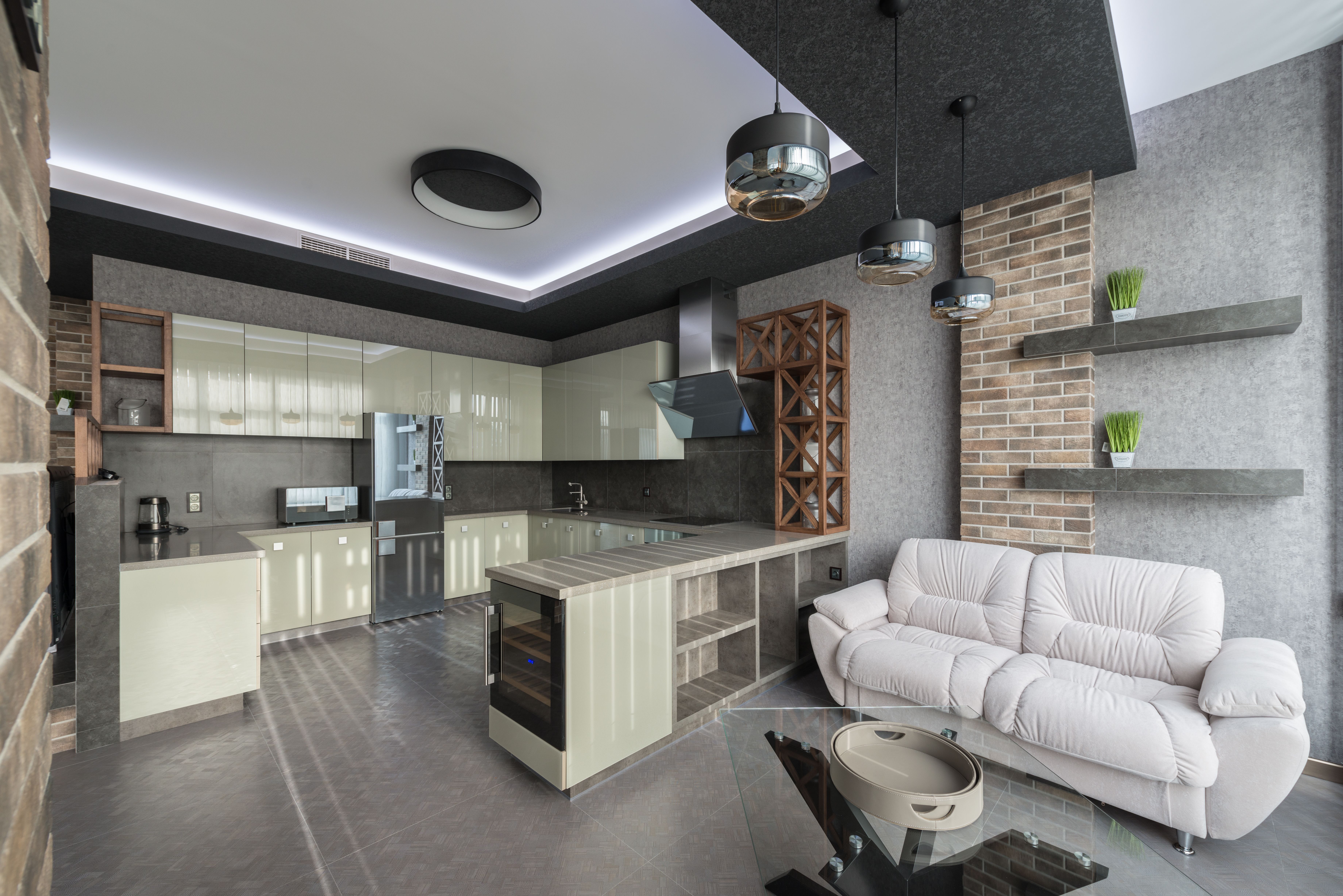
Open-plan living has a lot going for it. The cook isn’t stuck alone behind a wall, kids do homework at the island, and guests drift between the stove and the couch with a glass in hand. It feels social, bright and modern.
There’s one guest nobody invited, though: the dinner itself. When a kitchen opens straight into the living room, everything the stove releases has a short trip to the softest surface nearby. Steam, smoke, fine droplets of oil, the smell of last night’s garlic. Ask anyone who does sofa cleaning chicago apartments with open layouts, and they’ll describe the same thing – a sofa that looks fine from a distance but feels faintly tacky up close and smells a little like a restaurant on a busy Friday.
Virginia Woolf wrote that “one cannot think well, love well, sleep well, if one has not dined well.” True. But dining well in an open space comes with a small side effect for the furniture.
How Grease Travels
It doesn’t stay in the pan
Frying, searing and roasting release tiny droplets of oil into the air. Most of them are far too small to see. They float with the warm air rising from the stove and then drift outward as they cool.
Where it lands
Those droplets settle on whatever is in the path: cabinets, light fixtures, curtains and, in an open plan, the upholstery a few steps away. Fabric is especially good at catching them because its fibers have far more surface area than a smooth countertop.
Why it matters
Grease on its own is nearly invisible. The problem is what happens next. A thin oily film acts like double-sided tape for dust, pet hair and everyday grime. Over months, a light sofa can drift a shade darker without any single obvious stain.
The Smell Problem
Cooking odors are made of compounds that cling to fabric. Spices, smoke, fried food and fish are the usual suspects. Upholstery absorbs those smells and then slowly releases them, which is why a living room can smell like curry two days after the meal.
The EPA lists cooking among common sources of indoor air pollutants, especially when food is fried or burned and ventilation is poor. Some of what floats around a kitchen ends up settling in the fabric next to it.
Signs the Sofa Is Absorbing the Kitchen
A sofa that sits close to an open kitchen often shows a few telltale signs:
- a slightly sticky or tacky feel on the fabric surface
- gray or yellowish dulling on the side facing the kitchen
- cooking smells that linger long after the meal
- dust that seems to cling instead of brushing off
- darker zones on cushions closest to the stove
None of these show up overnight. They build quietly, which is exactly why they’re easy to miss.
Simple Ways to Protect the Sofa
The good news is that a few habits make a real difference without giving up the open layout.
- Run the range hood every time something is cooking, and leave it on a few minutes after.
- Make sure the hood actually vents outside if possible, since recirculating hoods only catch part of the grease.
- Clean or replace the hood filter regularly so it keeps working.
- Open a window or two during high-heat cooking like searing or frying.
- Vacuum the sofa weekly with a brush attachment to remove dust before it binds with oil.
- Wash throws and pillow covers more often if they sit near the kitchen.
Placement helps too. Even moving the sofa a few feet farther from the stove or turning it so the back faces the kitchen reduces how much grease lands on the seat and cushions.
Why Home Cleaning Struggles Here
Grease is not a water problem. Plain water slides over oily residue instead of lifting it, and many home upholstery cleaners are designed for spills rather than fine films spread across the whole surface.
Scrubbing harder usually makes things worse. It pushes the oily soil deeper and can leave lighter patches where the scrubbing happened, so the sofa ends up looking uneven.
Professional cleaning works differently. Pre-treatments break down the oily film across the whole piece, and extraction removes the loosened residue instead of moving it around. The result is often a sofa that’s suddenly a shade lighter all over, which surprises owners who never noticed it was getting darker.
The Smell Test
Here’s a quick check anyone can do. Press your nose into a cushion near the kitchen side of the sofa, then into one on the far side. If they smell different, the kitchen has been leaving its signature.
Funny, slightly embarrassing, and very useful.
Cooking Without Compromise
Nobody needs to stop frying eggs or roasting peppers to keep a sofa fresh. Open kitchens are about sharing the space, and the sofa is part of that.
M.F.K. Fisher, the celebrated food writer, is often quoted as saying, “First we eat, then we do everything else.” The open layout honors that order of priorities. A good hood, a weekly vacuum and an occasional deep clean simply make sure the connection doesn’t stick to the furniture.
Top photo image credit
Leave a Reply