

Every parent wants their child to have opportunities for a successful future. However, access to quality education isn’t equal across American communities. While four-year colleges remain valuable, trade schools offer another route to career preparation. For families concerned about education costs and employment opportunities, vocational training deserves serious consideration.
Why Education Inequities Matter
Students from lower-income households may face challenges that affect their educational opportunities. Limited access to academic counseling, reliable transportation, and career exploration programs can make planning for life after high school difficult.
College expenses create another obstacle. Tuition, housing, textbooks, and other costs may discourage students from pursuing additional education.
Trade Schools Offer Focused Career Training
Trade schools provide instruction for specific occupations, including electrical work, automotive repair, welding, and healthcare support. Programs often combine classroom lessons with practical training, allowing students to develop skills using equipment found in professional workplaces.
For example, marine mechanic schools prepare students to inspect, maintain, and repair boat engines and related mechanical systems. Many vocational programs take less time to complete than traditional bachelor’s degrees. However, program length, tuition, and employment outcomes vary considerably between institutions.
Practical Skills Can Support Career Readiness
Hands-on learning can benefit students who prefer applying concepts rather than relying primarily on lectures and written assignments. Vocational programs may introduce industry equipment, workplace safety procedures, and technical problem-solving skills before students enter the workforce.
Some schools also maintain relationships with employers that offer internships, apprenticeships, or entry-level opportunities. Parents should investigate whether programs provide recognized credentials and prepare graduates for required licensing examinations.
Choosing a Program Without Creating Financial Strain
Trade school isn’t automatically inexpensive. Families should compare total program costs, including tools, supplies, certification fees, and transportation.
Review graduation rates, job placement information, accreditation, and available financial aid. Public community colleges and registered apprenticeships may provide additional training options. Students should also research local employment demand and typical starting wages before selecting a career path.
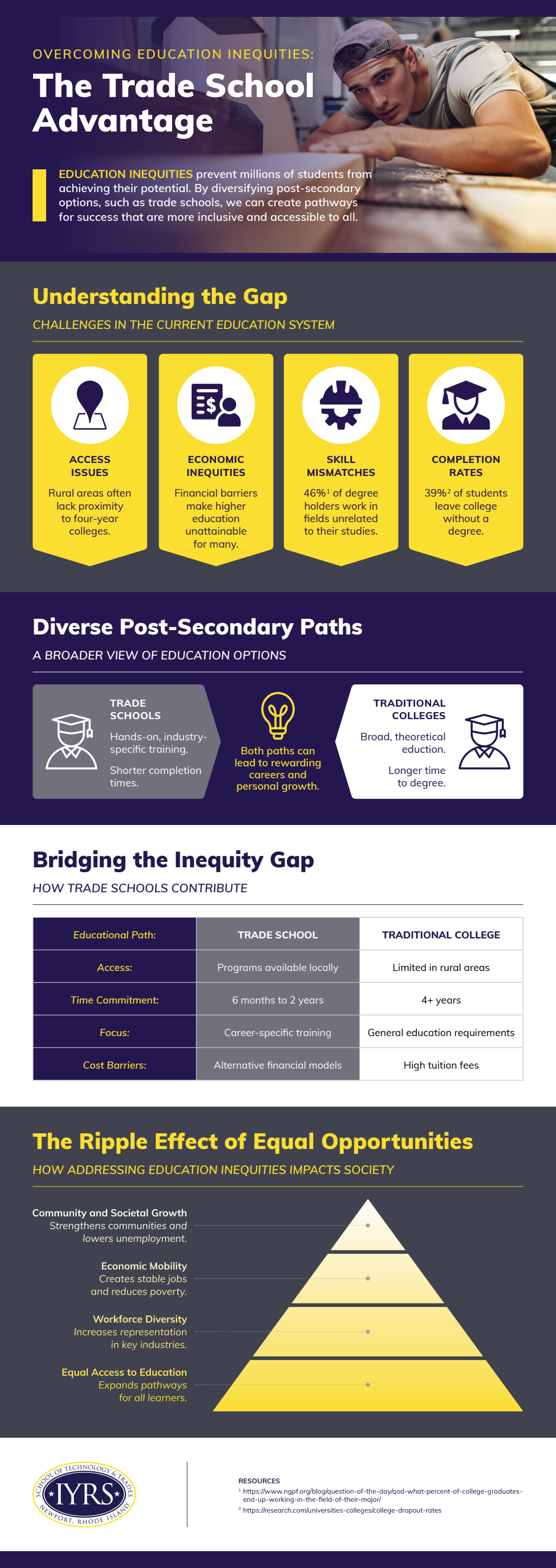
Reducing education inequities requires access to affordable, credible training opportunities. Trade schools can help expand those options by connecting practical instruction with specific career skills. Families that compare programs carefully can help students pursue education that fits their interests and financial circumstances. Look over the infographic below to learn more.
(photo credit: Microsoft Stock Images)
Leave a Reply