
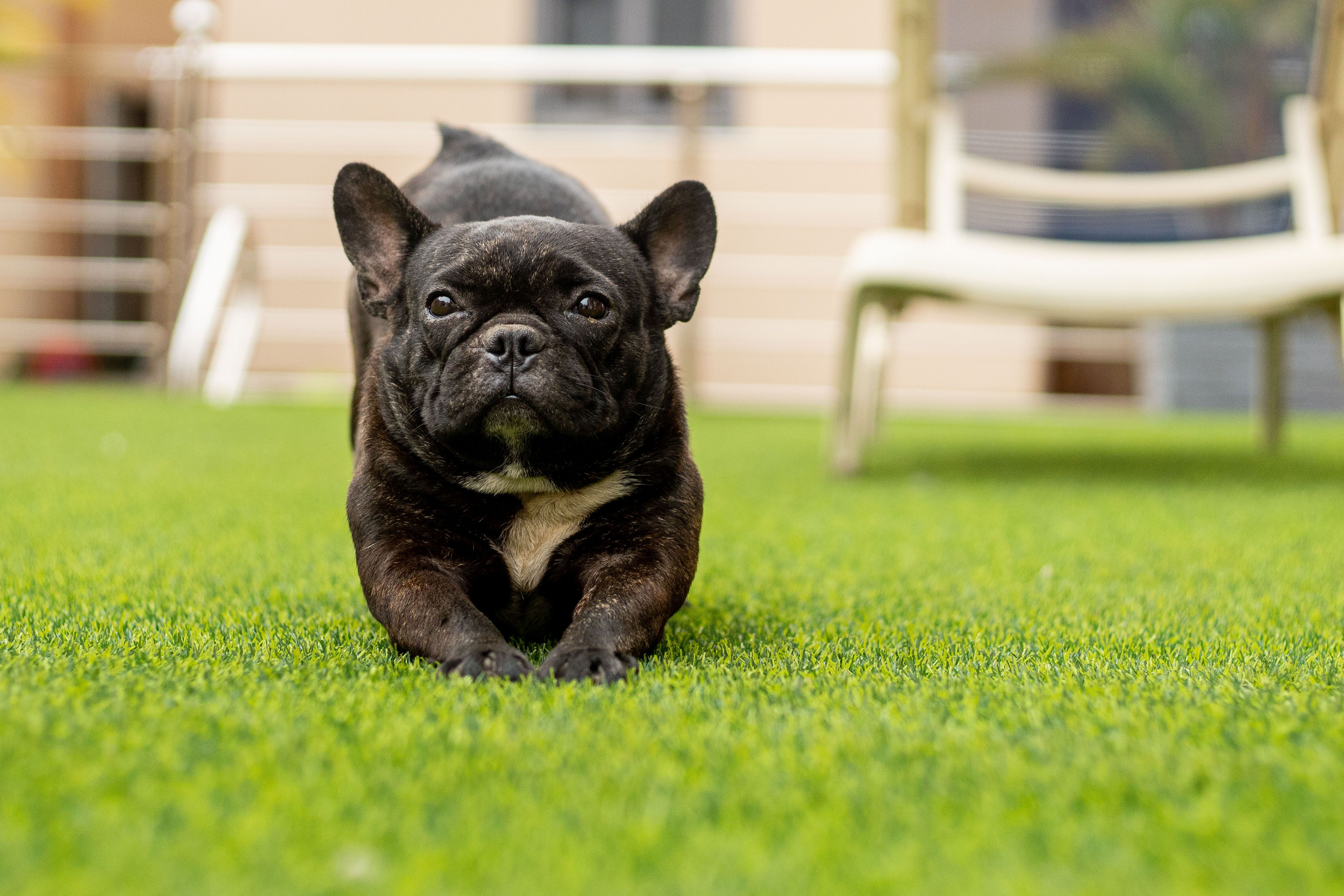
Dogs are hard on lawns, and lawns are only slightly kinder to dogs. Between the digging, the burn spots, the mud tracked across the kitchen, and the fleas that love long grass, plenty of pet owners eventually eye artificial turf as the peace treaty. It can be exactly that, but only when it’s chosen with the animal, not just the aesthetics, in mind.
For pet owners across the US, turf’s appeal usually starts with ending that irrigation bill and the mud that comes with it, then quickly turns to more important questions about safety and comfort. What should you actually know before buying? That the right product depends on materials, drainage, and installation quality, and that pet-specific turf differs meaningfully from the ordinary kind.
The details below are what separate a happy dog from an expensive regret.
The Right Turf Depends on the Dog, Not the Brochure
Turf marketing shows immaculate green lawns; your decision should start with the specific animal that will live on it. A senior spaniel who naps in the shade makes different demands than two young retrievers who treat the yard as a racetrack. Weight, claw pressure, digging habits, and time spent outdoors all shape which products will actually hold up.
Climate belongs in the equation too. Full-sun yards in hot regions need turf engineered to shed heat, while rainy areas put drainage capacity to the test weekly. The honest starting question isn’t which turf looks most like grass; it’s which turf still works for this dog, in this yard, in year five. Products built for pets exist precisely because the general-purpose ones weren’t answering that question.
Water and Maintenance Savings Are Real but Not the Whole Story
The practical upsides deserve their reputation. According to the EPA’s WaterSense program, residential outdoor water use runs to billions of gallons nationally every day, mainly for landscape irrigation, and a converted lawn simply exits that equation. Alongside the water savings come the rest of the everyday benefits:
- No more mud, so paws stay clean through every season
- No fertilisers, herbicides, or pesticides where the dog rolls and sniffs
- No burn spots from urine, and no reseeding the damage each spring
- Fewer fleas and ticks, which lose the sheltered thatch they breed in
Savings alone shouldn’t close the decision, though. Turf is a decade-plus commitment, and the factors that decide whether pets thrive on it come next.
Safety Comes Down to Materials, Backing, and Heat
Safety is the question owners rightly ask first: is artificial grass safe for dogs? The answer lives in the specifications. Detailed resources on whether artificial grass is safe for dogs walk through how fibre materials, infill choices, and backing construction determine whether a lawn is genuinely pet-friendly. Manufacturers such as ForeverLawn engineer turf lines specifically for dogs, with knitted backings and antimicrobial protection built in rather than added after.
When comparing products, ask for lead-free certification, non-toxic materials, and fibres soft enough for paw pads and bellies. Heat matters just as much: dark, dense turf in full sun can grow uncomfortably hot for bare paws, so lighter colours, heat-reducing technologies, and shaded rest areas belong in the plan. A quick touch test on a sample in August tells you more than any brochure.
Drainage and Odor Control Make or Break Pet Turf
Every pet turf disappointment traces back to the same pair of failures: water that lingers and smells that build. Preventing both is a design job, decided before the first roll is laid:
- Fully permeable backing that drains across its whole surface, not just through holes
- A properly graded base of compacted aggregate that moves liquid away
- Antimicrobial infill designed for pets rather than standard rubber crumb
- A simple rinse routine, with an enzyme cleaner for the favourite corners
Get the drainage stack right, and urine passes through and away, leaving nothing to bake in the sun. Get it wrong, and no amount of aftercare fully rescues the installation. This is the section of the quote worth reading twice.
Installation Details Decide How Long It Lasts
Dogs test installations the way weather tests roofs: constantly and at the weak points. Edges are the classic one, since a determined digger will find any loose perimeter, which is why pet installations secure borders more aggressively and often trench them deeper than standard landscaping jobs.
Seams matter for the same reason: needing to withstand claws and zoomies without ripping. Ask installers specifically about their pet projects: how they handle seams, what base depth they use, and how their warranty treats pet wear. A pet-experienced installer will answer with specifics and photos. The product warranty may run fifteen years, but it’s the workmanship underneath that decides whether the lawn actually gets there.
Conclusion
So what does every pet owner really need to know before choosing artificial grass? That the decision is a specification exercise, not a colour choice: safe materials, genuine drainage, heat awareness, and installation built for the way dogs actually use a yard.
Answer those points honestly, and turf delivers what the brochures promise, which is a clean, green, low-effort space the whole household enjoys. Skip them and the shortcuts surface within a season or two. The good news is that none of this is hard to check; it just requires asking before the purchase instead of after. Your dog can’t read the spec sheet, so read it on their behalf. The yard that results is worth the diligence.
Top Photo: Image Credit
Leave a Reply