

Swimming is a favorite summer activity for families, but the chemicals used to keep pools clean can sometimes impact lung health. Chlorine, bromine, and other disinfectants protect against harmful bacteria, yet repeated exposure to their fumes or vapors may irritate the respiratory system, especially for children. Understanding how pool chemicals interact with air and the body can help parents make safer choices.
The Role of Chlorine and Disinfectants
Chlorine is the most common pool chemical, effective at killing bacteria and viruses. However, when it reacts with organic matter like sweat, skin cells, or urine, it produces chloramines. These compounds are responsible for that sharp “pool smell” and can irritate the eyes, nose, and lungs. Children and adults with asthma or other respiratory sensitivities may experience coughing, wheezing, or shortness of breath during or after swimming.
Bromine, another disinfectant, can have similar effects. Though often used in hot tubs or indoor pools, bromine also forms byproducts that can aggravate airways. The risk increases in poorly ventilated areas where fumes accumulate, emphasizing the importance of air circulation around indoor swimming facilities.
Minimizing Exposure
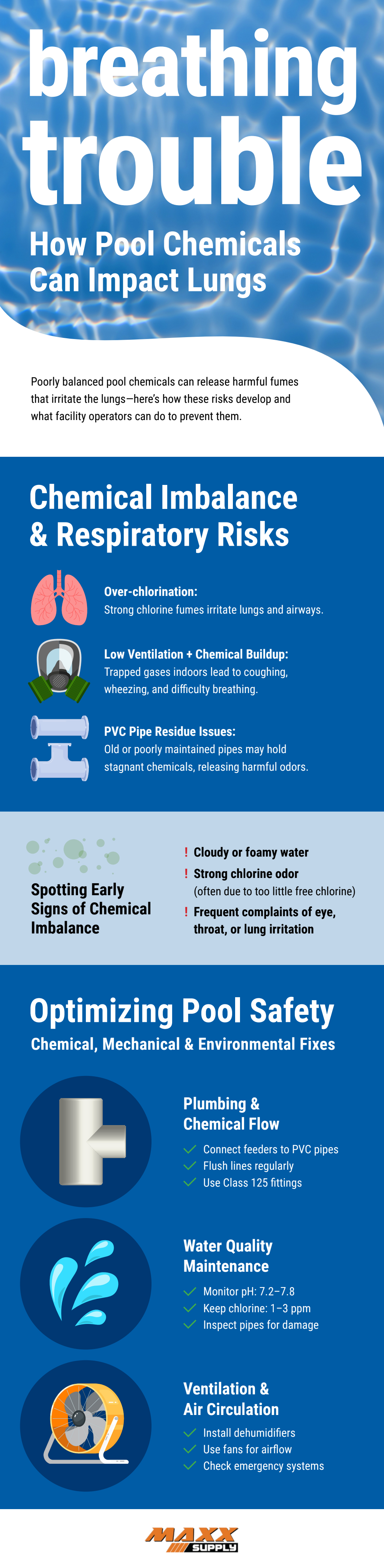
Proper ventilation and pool maintenance are key to reducing respiratory irritation. Outdoor pools benefit from natural airflow, while indoor pools should have mechanical ventilation systems that remove chemical vapors from the air. Pool staff or homeowners can also monitor chemical levels to prevent excessive chlorine or bromine concentrations.
Parents can encourage children to rinse off before swimming to reduce organic matter in the water, which limits chloramine formation. Wearing goggles and keeping heads above water when possible helps reduce direct inhalation of fumes. Simple measures like brief breaks from the pool or swimming in areas with better ventilation can significantly lower chemical exposure.
Equipment Considerations
Certain plumbing and pool equipment can affect chemical distribution and air quality. For example, using a PVC butterfly valve in circulation systems ensures consistent flow and proper chemical mixing, reducing hotspots of high chemical concentration that could otherwise contribute to stronger fumes. Even small improvements in pool design and maintenance can support healthier swimming environments.
Monitoring pool chemicals and implementing these precautions allows families to enjoy swimming while reducing the risk of respiratory irritation. Awareness and practical adjustments can protect children’s lungs, making summer fun safer for everyone. Check out the infographic below to learn more.
Top Image: Microsoft Stock Images




Leave a ReplyCancel reply